
The Cacao Boost
How working with cacao is lifting my mood and cutting through the fog this winter

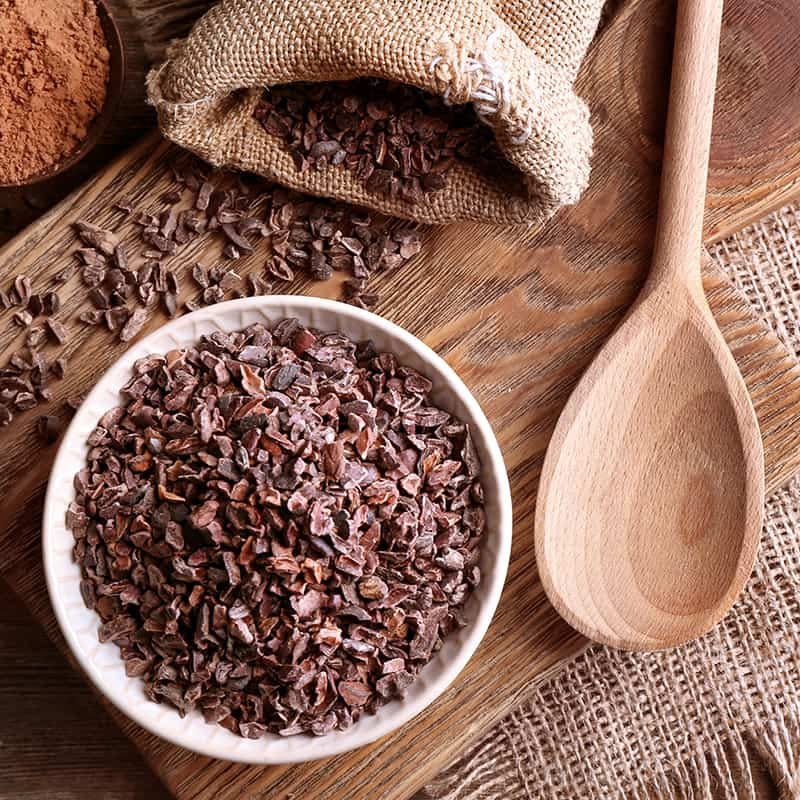
Cacao has been a close companion of mine in recent months, and while medicinally and nutritionally there are a multitude of benefits, for me it has been mostly about a mood boost and a gentle stimulant when I get to feeling sluggish.
It only has about 10% the caffeine of coffee (and without the jitters), but it has other neurological properties that definitely seem to ‘lift the fog’ in some ways that can be really nice this time of year. And the anti-inflammatory effects are an added bonus!
I’ve been getting cacao nibs and then making a decoction with some other herbs. You could do 100% cacao nibs, but if you’re mixing with other herbs, try maybe 50% or more cacao and just see what suits you. Your total should be 1 heaping TBS per cup, up to 1 qt a day. And you can make up to 3 days worth at a time and keep it in the fridge.
This must be prepared as a decoction because you are working with denser parts of plants that take longer to break down--so that means it must simmer, covered, for 25 minutes. Here’s a base blend you can play around with:
CACAO DECOCTION BLEND
-At least 50% cacao nibs
-app. 40% adaptogens of your choice (eleuthero, astragalus, ashwagandha, reishi, chaga)
-Maximum 10% of licorice and/or cinnamon for sweetness (or just add honey)
*Bring water to boil, add herbs, cover and let simmer for at least 25 minutes. Drinking within 2-3 days.
It’s a great way to get some reishi in–one of my favorite adaptogens and immune modulators. On its own reishi can be a challenging flavor, but with cacao it only deepens the cacao flavor. It also blends well with any of the mild tasting adaptogen herbs that help us manage stressors better--think ashwagandha, astragalus, eleuthero, codonopsis...
Adding a tiny bit of licorice and/or cinnamon will sweeten it up without any calories, but a little goes a long way--never more than 10% of your entire blend or it will be dominant and cloying. And at such a small amount, the cinnamon flavor really still comes through, but you just get sweetness from the licorice and not that distinct licorice taste.
This is a really fun formula to play around with and customize for your own needs or for someone else. More stimulating adaptogens (like eleuthero) will make it more like a coffee substitute, but these days most folks are depleted and really need to build up their reserves with the more restorative adaptogens. So you can play around with proportions to get it just right for whatever your herbal intentions are.
OPTIONAL: If you want to really geek out on extracting the various medicinal constituents you are working with, you can take an extra step in your prep. Herbs like reishi and astragalus do well with a long extraction time, so if those are in your blend, you could let them simmer for up to several hours to keep extracting more benefits! But if you do that, don’t add the cacao in until the last 25 minutes.
Why? Because cacao is more delicate, and some of the beneficial flavonoids it contains (those are the ones bringing down excess inflammation) can start to break down at higher temperatures the longer you simmer them. So if you want to get the most from your cacao, you won’t do a longer decoction with it.
Different brands of cacao nibs can have significantly different flavor profiles and range in terms of quality. I like the ones from Mountain Rose Herbs–they are definitely on that richer, true cacao taste side of things. The less expensive Navitas brand still has notable effects on my mood, but I just don’t think the flavor and quality are as good.
I think sometimes when we get chocolate cravings, we are really craving the medicine that cacao has to offer. It’s really high in magnesium, for example, and many of us are deficient in that (although you would get more magnesium from actually eating the nibs than making a decoction). And while I still eat a little dark chocolate every day, drinking a cacao decoction allows me to go so much deeper with the plant medicine without having to worry about the sugar or calories adding up.
So what about Ceremonial Cacao–is that something different? You may have seen ads for that recently as it’s getting kind of trendy. It’s sold as a cacao bean paste, so that’s one difference from using cacao nibs. The paste dissolves easily, making it pretty quick and convenient to prepare. Often (but not always) it uses criollo cacao beans, which are rare heirloom beans prized for taste and quality, and grow wild in the rainforest. The catch is that these beans are hard to find and quite expensive, so not accessible for most of us right now.
Personally, I think that anything you are doing with respect and intention with a plant can be ceremonial. Traditionally, cacao ceremonies were slow simmered (not quickly dissolved in a paste), and I think there is something to be said for taking the time to prepare a decoction and drink it unhurriedly, so I don’t think you have to buy the brands specifically marketed as Ceremonial Cacao to get a lot out of it.
At the same time though, I absolutely love that the cacao varieties that grow wild in the rainforest have been rediscovered and are now highly prized. More rainforest will be saved if a commercial crop exists in it, so if heirloom cacao can help us protect the rainforest–so be it! If you want to read more about this movement, I highly recommend the book Wild Cacao: Across the Americas in Search of Cacao’s Soul by Rowan Jacobsen.